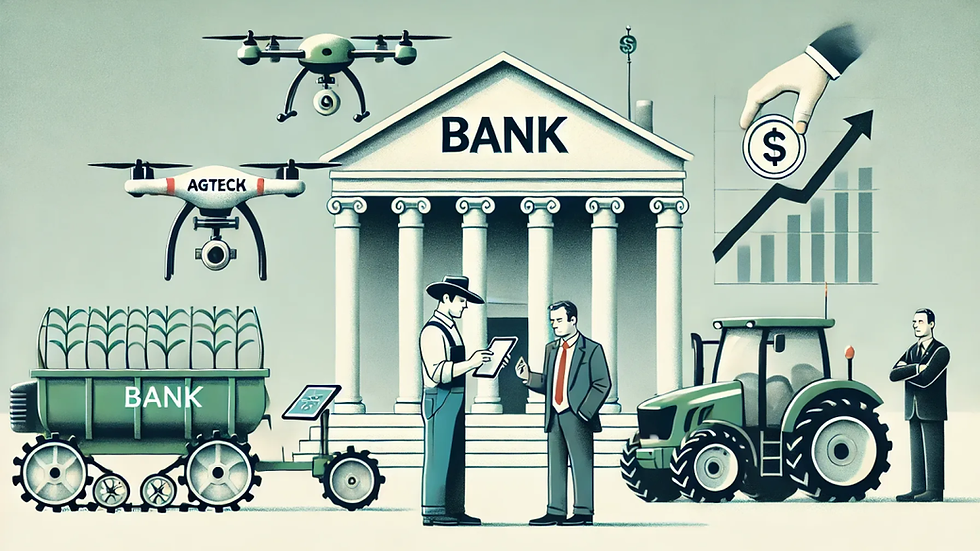
The farm data value paradox


Data collection is nothing new to farmers; humans have been manually recording data about their crops, yields, prices and the weather since the very early days of agriculture. What is more recent is the ability for farmers to collect and store digital data. Digitisation of data has meant that storage has become much easier, shrinking information that would have taken up many hundreds if not thousands of physical files or notebooks, onto a coin sized device. Nothing surprising here, digitising data has been happening across all industries for years. What is new is the ability for farmers to start to manipulate data and use it to make decisions and inform actions on their farms. Also new is the diversity of the data that can be captured on farms, once upon a time farmers would have been limited to a field by field record of yield and a rough measure of rainfall for the day or week. Now farmers have data about specific areas within fields from yield maps, temperature, pressure and meteorological data from sensors all over the farm and even data from their tractor.
Data driven decision making in agriculture has spawned a proliferation in new products, companies and services, everything from drones to satellites and robots. All of these products have been focused on the collection and manipulation of farm data to add value. The opportunities are clear to see, with enough farm data and the application of well trained AI models or software, there are huge opportunities to help farmers reduce inputs, save money, increase outputs and even add value to their end product.
Beyond the direct value to farmers, data collection businesses have been drawn to the value that farm data has for other players in the agricultural and food space such as processors, machinery manufacturers, agronomists and agrochemical manufacturers.
While almost everyone agrees data is extremely valuable, very few have been able to realise this value. This can be seen in a number of high profile data aggregation and data collection companies that have gone out of business, taken huge valuation drops or have been forced to pivot to other income streams or sectors a few recent examples include:
Gro-Intelligence, a data aggregation and data analysis company in the agriculture and commodities space announced it was closing its doors in early 2024.
Hummingbird technologies, a drone based crop data collection company sold to Agreena in 2022 and has been pivoted to providing carbon credit verification data rather than crop insights for famers.
Small Robot Company - a scouting robotics company focused on ‘per plant’ data collection went into administration at the start of 2024.
Farmers Business Network (FBN) - was founded on the back of farmer data sharing and analysis; has now pivoted towards the creation of a marketplace for agricultural inputs, machinery and finance.
Meropy, - an agricultural robotics company, ceased development of their SentiV crop scouting robot in 2023.
While there are other factors at play, such as the economic backdrop and access to investment; it seems that there could be a paradox when it comes to farm data value, it’s like a precious artefact in a museum…you can see it but you can’t touch it.
So is it impossible to extract value from agricultural data? Or is there a secret recipe to distilling its value? Well, there are some companies that seem to have figured out the right ingredients:
Linking data capture to value adding activities. This is a point that is explained well by Paul Mikesell CEO of Carbon Robotics when he spoke about the Carbon robotics laser weeding product on the Future of Agriculture (FoA) Podcast “We started with something that did something and a by-product is taking all of these images”. What Paul means is that the value adding service for the farmer is the weed management that the laser weeder is doing for the farmer not the data capture, the data capture is a useful by-product.
Don’t expect farmers to pick up the bill for data capture. This point is well made by David Friedberg (CEO of Ohalo Genetics and Founder of Climate Corporation) when he was interviewed on the The Modern Acre “Farmers don’t want to pay for data they want to pay for results”.
Deliver insights not data. Linked to farmers paying for results not data; Farmers are busy and want new tools to help make actionable decisions on their farm. Providing data on its own doesn’t work, farmers need to know what the data means for them and their operation. This is where software and AI can help to interpret data and provide recommendations.
Multiple data layers. Another great point from David Friedberg on the Modern Acre podcast “You can’t do great predictive modelling without the integration of other data sets, so one image of a field without knowing what was planted, what fertility application was done, what the yield was last year, what the soil type is.” Historical and multiple datasets are key to providing accurate insights to farmers.
Build trust with farmers. Another key point from Paul Mikesell on the FoA Podcast was, “Our agreements with farmers are that we don’t sell their data…” This highlights the importance of being transparent with your customers about what happens to their data. If part of the business model is built on selling data to third parties then this needs to be clear from the outset. Ideally the business model should help share the value of the data with the farmers to keep the service delivery very cheap or even free! For example could the sale of farm data subsidise the cost of capture and analysis for farmers?
Use data to improve your products. Another pearl of wisdom from Paul Mikesell on the FoA podcast “We won’t use data for any purpose other than building good products”. Using data to improve your products ultimately benefits the farmer as they gain access to better products. Data informs product development and new products become possible when new insights are available to engineering teams.
Building data moats. Building repositories of high quality data is key to a long term data strategy. High quality data is the fuel required for high quality AI models, if you want to improve your AI models then you should start by improving and increasing the data you train them on. John Deere have been using their see and spray system to gather crop image data from machines in service to help improve their data sets. Helping to build a strong position in the market that is hard for competitors to copy or recreate.
Avoid building bespoke platforms. Many players in the data space have spent huge amounts of money building apps or platforms to display a single data layer. Farmers don't want another platform or app, they want to work with their existing tools. How many unused apps do farmers already have on their phone? Players in the agtech data space need to think about how they can integrate with existing systems or tools that farmers already use, potentially through APIs or collaborations with existing digital tool providers such as machinery OEMs or farm management software companies to make adoption painless.
Data can’t replace human relationships. Data driven solutions for farmers should aim to enable and enhance relationships between farmers, agronomists and other advisors not replace them. The relationships between farmers and their advisors are built over time and there is more value in these relationships than a new tool or app can deliver on its own.
So it seems that there are some keys to unlocking farm data value that are serving some of the most successful companies very well. In this new age of data driven decision making, a clear farm data strategy will be key to anyone trying to build products and tools for farmers.